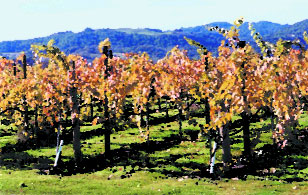

| A Vineyard in Your Backyard | |
| By Kate F. Love | |
|
Resources Napa Valley College Crop Care Associates Napa Valley Ag Supply |
Sometimes it can seem as though
everyone in the Napa Valley is in on grape growing, and making money
at it as well. If you are not, take heart, it can be done with a
bit of land around your house, some cash to get started and lots
of research. You can get in on the action, have beautiful vines,
increase the value of your property and eventually generate a modest
second income. The strategy is simple: pay a local grower to help you put in your
vines, and write the cost off as a business expense. Wait for the
vines to grow, enjoy the seasons and the view and keep writing off
your expenses. When the vines are mature enough (it depends on the
varietal and other factors), sell the grapes (remember, they are
coveted Napa Valley grapes), deduct expenses from your newfound
business profit and drink a bottle of your own vino. There are a few other details to take into consideration, however,
enough in fact to discourage the faint of heart. The first step
is the soil and water tests. Tests begin at $400 and go up depending
upon how many holes are dug and tested on your land. This is particularly
important because the quality of your soil and water determines
how much the project will cost, if it is viable and what vines (varietals)
can be grown. Because land and soil are unique, the cost of preparing
the soil for the vines will vary. Will it need to be rototilled;
will it require nitrogen, lime or more? Your water could contain
boron, too. If that’s the case you can’t use it for irrigation
and you’ll have to incur the extra cost of using city water. Next you need to find a grower to put in the darn things and guide
you through the pitfalls of farming. Finding a grower you can trust
and get along with will take some time and research. Decisions must
be made as to how much space to have between rows, how many vines
there will be in each row, how to arrange the vines and rows within
your plot of land and what varietals and varieties would best suit
your property. A grower will also advise you on how to watch out
for and handle Pierce’s Disease and the glassy-winged sharpshooter.
The actual rootstalks are purchased through a viticultural nursery. Costs for your new venture will also vary according to how much
physical work and research you yourself are willing or able to do.
Generally speaking a vineyard can cost $10,000 per acre. That’s
to get the vines and a water system properly installed. Grower consulting
fees are usually $45 to $55 per hour, although some growers simply
charge a flat fee for the job. Most vines produce a very small crop the third year, but you can
expect a harvest the fourth year. Tonnage per acre will vary according
to how many vines are planted, the type of grape and the way they
are pruned. Traditionally vineyards were planted with eight feet
between vines and ten feet between rows. Now many growers use five
feet (vine spacing) and eight feet (for rows) as their model. Clearly
the modern plan yields more tons per acre. How much will you get for your grapes, the bottom line? Price per
ton varies but Chardonnay can sell for $2,000 per ton, Merlot for
$2,600 and Cabernet $3,000 and up. You can also count on doing some
more research when it comes to finding a buyer for your crop. Finally, don’t forget that your new vineyard will not only bring in cash, it will also increase the value of your property. After all, this is the Napa Valley.
|