
|
Market
 Basket Basket |
|
|
Winery Chef
|
|
|
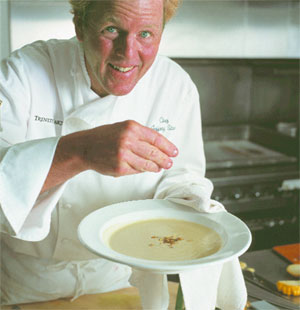
Jeffrey Starr
|
|
|
Photographs by Rick Bolen
|
|
|
In the Market Basket
|
It may seem like the dream job for someone who loves to cook and appreciates wine, being the executive chef for a wildly successful family-owned winery in the Napa Valley. No worries about paying guests or nightly specials, no staying up late at night balancing the books or taking inventory. You get to spend the time cooking for an appreciative audience without the hassles that drive many chefs out of the business. Right? We went to Chef Jeffrey Starr for the answers. |
|
Starr has been executive chef at Trinchero Family Estates for five
years, following a career that included running his own catering
company. He came to the Napa Valley to open Table 29 restaurant
(now known, under different owners, as Don Giovanni) with Jonathan
Waxman and Steve Singer and he has simply never left. Prior to that
his resume included a degree in food science, stints at Dakota’s
and the Crescent Club, both in Dallas and as Mark Miller’s
first sous chef at the now famous Coyote Café. While the notion of the role of winery chef may seem bucolic and
serene, Starr keeps busy with private dinners entertaining guests
and clients of the winery, participating in special events like
the Napa Valley Mustard Festival (where he earned the “Critic’s
Choice Chef of the Year” award an unprecedented two years in
a row), designing menus and food and wine pairings, contributing
to cookbooks and newsletters and much more. Does he have days off?
Yes. Does he have many of them? Not really. But then it helps when
you have a job you love, in the place where you know you want to
live.
|
|
|
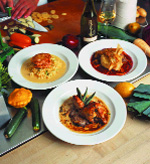
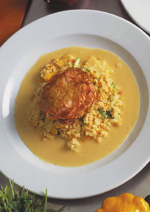
Potato-Crusted Salmon Filet on Israeli Couscous with Sweet Orange Pepper Butter |
|
|
For the CousCous For the Sweet Orange Pepper Butter Potato-Crusted Salmon |
Bring 2 cups of water to boil in a saucepan. Add the Israeli couscous
and cook until al dente. Pour through a colander and shock the couscous
with water to stop the cooking. Toss the couscous with olive oil
to prevent it from clumping. Combine the shallot, orange bell pepper, thyme, peppercorns, and white wine in a saucepan. Simmer until 2 tablespoons of liquid remain. Over low heat, whisk in the butter a tablespoon at a time. Strain out the solids and discard. Season the butter sauce with salt and white pepper. Peel the potato and spin fine potato strands on the smallest blade
of a Japanese vegetable turner (available in Asian markets or cookware
stores) or by hand using a small, sharp knife. Season the salmon
filets with salt and pepper and top with enough potato strands to
cover the top surface of the salmon. Heat the olive oil and butter
in a non-stick sauté pan until the butter foams. Carefully
place the salmon filet, potato side down, into the pan. Cook To Serve
|
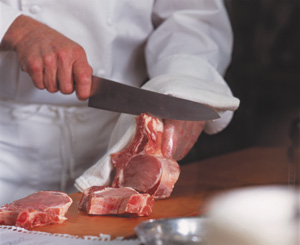
| Grilled Pork Loin Chop with Garlic Mashed Yukon Gold Potatoes, Apple Chutney, and Crispy Parsnip Chips | |
|
For the Apple Chutney FOR THE GARLIC MASHED YUKON GOLD POTATOES PORK LOIN CHOP FOR THE PARSNIP CHIPS
|
Combine the potatoes and garlic in a saucepan and add enough water to cover. Bring to a low boil and cook potatoes until tender. Using a colander, drain off the water, return the potatoes to the saucepan, mash, and add the milk and butter. Season with salt and white pepper. Using a vegetable or potato peeler, cut long, thin parsnip ribbons.
Deep fry in 300° (F) vegetable oil until golden brown. Remove
to an absorbent towel to drain and crisp. Season the pork chops with salt and pepper. Grill over a medium
fire until done to your liking. To Serve |
|
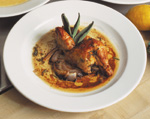
Citrus-Roasted Game Hen with Caramelized Onions and Sage Brown Butter |
|
|
THE GAME HEN FOR THE SAGE BROWN BUTTER
|
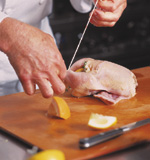
Thoroughly rinse and dry the game hen inside and out. Season the inside with salt and pepper. Stuff the body cavity with the grapefruit wedge, lemon, garlic, and thyme. Truss. Brush a roasting pan with the olive oil. Arrange the onion slices on the roasting pan and place the game hen on the onions. Roast in a preheated 400° (F) oven until done, about 30 minutes. Heat the butter in a sauté pan over medium heat. Continue
heating until butter browns. Do not let burn. Add the sage and black
pepper. To Serve Split the game hen into 2 pieces through the backbone. Place the oven caramelized onions in the center of 2 warm plates. Top with the game hen. Spoon sage brown butter over the game hen.
|