

| Winter Work | |
| By Congressman Mike Thompson | |
 |
Hard rains in the Napa Valley bring out more than green hills and
winter birds. Like the swallows to Capistrano, Bay Area television
reporters make their annual Wine Country pilgrimage to perform their
periodic “flood” stories. The image beamed back to urban viewers is always the same: film of the obligatory vineyard with a foot or two of standing water. The commentary is choked with concern for the wet vines, the future of next year’s Cabernet and California’s $33 billion wine industry. But locals know better. The vines are sleeping during winter months, dormant and safe from nature’s hardest blows. During this period it’s difficult not to feel the sense of peace and tranquility they bring to our valley.
Wilcox Tractor Company used to be the only farm equipment store
in town; it stood where the new St. Helena Olive Oil Company is
in Rutherford. As a young man I remember working there as well as
at Beringer and how busy we were in the winter months getting everything
ready for pruning and tractor season. Contrary to some beliefs, those beautifully manicured rows of vines
don’t look that way for the benefit of visiting photographers.
There’s an art to properly pruning vines during the winter
months to ensure the highest quality of grapes. It takes ten workers
roughly two hours to prune 700 vines, the equivalent of a single
acre. With more than 32,000 acres of vineyard in Napa County the
work is staggering. Like a rose bush, each vine is pruned individually
depending on its shape and strengths. The more wood that is removed
- pruned - the more vigorous the regrowth. After pruning comes the
never-ending job of tying the cordons onto the trellising wires
and retying the shoots after they grow. Between rainstorms you’ll see workers taking advantage of
the soft soil by driving in stakes for new vineyards. Hundreds of
acres require replanting each year due either to disease or vines
that have simply run their course. It takes three years for new
vines to bear their first small harvest and many varietals reach
their prime only after 25 or 30 years, about the time aging begins
to affect their yield. The majority of the winter work is probably never seen by the public.
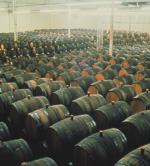
Thousands of wine-filled barrels are being emptied, cleaned, dried
and refilled by hand (called racking). And many who work in the
wine industry use the winter to continue their education in viticulture
at both our local Napa Valley College and at UC Davis, to keep up
with the latest environmental regulations and research. U.S. Representative Mike Thompson represents California’s First Congressional District, which includes Napa and six other Northern California counties. He is a native of St. Helena. |