
 |
Pressing for Gold |
| Harrison Olive Oil | |
| By Andy Demsky | |
|
|
Harrison Vineyards' production
of its award-winning olive oil started with the discovery of a large
rock in Tuscany. "Lyndsey and Michael spent a month in the Tuscan countryside
in 1992 and everywhere they went people had their own small plots
of grapes and olives," says Sofia Harrison of her stepmother
and late father. "They fell in love with the whole way of life." During the course of their visit in the tiny town of Montefiridolfi,
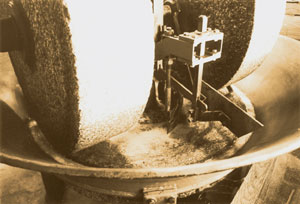
the couple found a century-old three-ton granite olive crushing
wheel, an olive press and a gravity separator. And back home on
their 48-acre property overlooking Lake Hennessey, in addition to
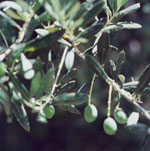
Chardonnay and Cabernet grapes, grew a stand of some 50 olive trees. It all clicked. "We've got olive trees,' they thought," says Sofia Harrison,
"'and so do so many of our friends and neighbors. Let's all
get together and make olive oil!'" The Harrisons shipped over the historic crushing wheel and press,
harvested their first olives and plunged right in. "That first season we worked through so many problems,"
says Harrison with a laugh. They were shipped an engine for the
grinding wheel, later realizing it was the wrong one. "When
we hooked it up, the wheel spun about 1,000 miles an hour,"
she says. "We learned a lot about making olive oil, real fast." Today Harrison Vineyards produces several lines of olive oil, appealing to a variety of tastes and budgets. The Estate Reserve is sold in distinctive hand-blown, swan-necked 275 ml bottles and retails for up to $50. This oil is made exclusively from olives on the Harrison property. One ton (which equals the fruit of ten to 15 mature trees) produces just 19 gallons of pure extra virgin oil; last year's harvest resulted in fewer than 50 gallons. |
|
In case you are wondering just how popular olive oil is, according to the North American Olive Oil Association it accounted for nearly a third of all cooking oils sold in this country, close to four hundred million dollars worth. So where should you go to buy yours? Here are some local suggestions.
Napa Valley Olive Oil Shopping Palisades Market Napa Valley Olive Oil Manufacturing Co. Cantinetta Tra Vigne Dean & DeLuca St. Helena Olive Oil Co. Gordon's Café and Wine Bar Browns Valley Market Reading Resource: How to buy it, store it, taste it, grade it and, of course cook with it, it's all in this delightful book. Part resource guide, part international cookbook, part reference, it is an easy-to-use volume that's also very nicely (and succinctly!) written. It is beautifully photographed by Laurie Smith. Highly recommended. |
The Olio d'Oro (Oil of Gold) is a popular line retailing for a
more affordable $14.95 per 375 ml bottle. It embodies the relaxed,
sociable spirit of Tuscany. Friends of the Harrisons bring their
olives in from throughout Northern California to be crushed and
spun into the prized liquid. Only half of this production makes
it to the marketplace wearing the Harrison label, since the oil
that's produced is divided between the vineyard and the olive growers.
The results of this neighborly effort have won over numerous critics,
including a writer at the The New York Times, who called the oil
"full-bodied, thick, mild-tasting." The most recent bottling
of the Olio d'Oro resulted in fewer than 300 cases. Olives for Harrison's oil are usually harvested in December, an activity which dovetails nicely with wine production, since grapevines are in their winter dormancy by this time.
The olives go under the large stone crusher wheel, producing a
paste the consistency of oatmeal. This paste is then pressed between
matted disks to separate the liquids and solids. The oil and water
components are then separated in a centrifuge and the resulting
oil is filtered and allowed to settle for about two weeks before
bottling. Unlike most wine, even the rarest olive oil is ready to enjoy upon
bottling, says Sofia Harrison. No aging is necessary so instant
gratification is not only permissible, it is encouraged, a nice
thing to say about such a delightful indulgence. For more information about Harrison Vineyards' olive oils, wines and other products, visit www.harrisonnapavalley.com. |