

 |
|
 |
It's the final extension of the
art, the final parameters. And it can be as personal as the artwork
itself. It can be simple, highlighting the art, or it can be elaborate,
making a work more important or more substantial by the way it is
framed and presented. But the question remains, where do you begin?
"Perhaps it's as simple as asking someone why they bought
the piece of art in the first place," said Michael Schaer,
proprietor of MJ Schaer Gallery
on First Street in Napa. With 25 years of experience, there are
few special requests he has not heard, few styles of art or variety
of subject matter he has not been presented with. "Part of what I do is ask what I hope are the right questions,"
he said. "I ask them where the picture will be hung. That's
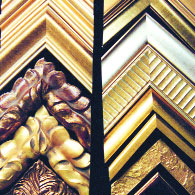
a big consideration. Sometimes that means an elegant gilded frame,
other times it might mean rustic. Elaborate versus simple, anything
from natural woods or a simple black veneer all the way up to Italian
hand-carved, hand-finished frames, or a complete custom design. Price is another consideration. The same piece of art might cost
$175 to frame, or it might cost $375, depending upon the cost of
the materials and the work involved. Frames, for instance, can range
from a low end of four or five dollars a linear foot (times the
total number of feet and inches measured on all four sides) to as
much as $75 or $80 (or more) per foot for that elaborate Italian
design. Mattes are another issue. Simple white matte, a double hand-wrapped
fabric matte with a fillet (an inner wooden liner), or perhaps a
matte that is beveled? Do you want four, six or eight ply, acid
free archival or not, and what about the type of hinges, the pieces
that attach to the art itself? The price of the matte is calculated
by figuring the united inches (width and height), and then referencing
a scale that determines the final price. Then there is glass. Do
you want standard premium clear glass, which is used for most projects,
or does it need to be non-glare (which presents new framing considerations)
or a UV- restrictive specialty glass? A good framer will be able
to guide you along this path, providing the answers that you need,
based on experience. Dollars aside, the entire question of framing is still a very personal one. Expect to spend some time on your initial visit, so you can consider each alternative. And don't be in too much of a hurry. Great framing, like great art, takes time. |