

| The Technical Side | |
| 2000 Harvest report: The Red Varietals | |
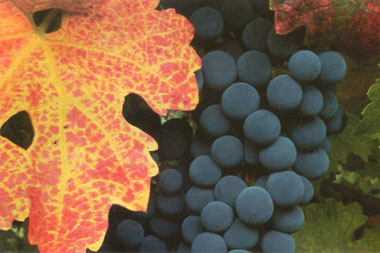
| Winemakers are anticipating that Vintage 2000 will be considered a classic year for red wine, thanks to an ideal growing season. "This was the kind of growing season that has made the Napa Valley famous," said winemaker Cathy Corison. "Hot days and cool nights create the perfect conditions for making our best wine." | |
|
|
|
Mother Nature on Our Side
|
|
| From the Napa Valley Vintners Association | |
|
With the exception of a heat
spike in June, the Napa Valley experienced a cool summer and early
fall. While bud breaks occurred at the expected time, Corison actually
began picking seven to ten days later than normal. "The addition of a couple of days of rain in September gave
the grapes the extra kick to keep hanging and ripening, adding to
the hang time which allows the full natural flavors to develop on
the vine," said winemaker Bill Ballentine from St. Clement
Vineyards. The result, according to Corison, was a crop with excellent
color, fully developed flavors and great acidity. "Flavors
have been developing at lower sugars than in other years, allowing
us to make full-bodied wines at lower alcohol levels." Steve Test, director of winemaking at Merryvale Vineyards, said
the fruit was even riper than the numbers showed. "It was a
nice position to be in because you could wait for the numbers to
come up knowing that the flavor's already there." Winemakers around the Valley are in agreement. At Cosentino Winery,
Mitch Cosentino characterized the 2000 harvest of red grapes as
having "big acid and big bright fruit." He adds, "the
hang time on the vine, combined with the exceptional acid balance,
reminds me of the 1985 vintage, but more complex. Even while reaping the benefits of a superb growing season, Mother
Nature had a few surprises in store. At first, according to Corison,
the Cabernet Sauvignon vintage appeared to be unusually large. When
it came time to crush, it became apparent that the high number of
clusters would weigh in lighter than they looked, as the berries
were smaller than normal. Winemaker John Gibson at Frazier Winery had a similar experience.
"Cluster counts were high but cluster weights were down. Still,
we had expectations of a fairly large crop, approximately 80% of
the tonnage of the 1997 harvest. The Cabernet Sauvignon crops are
the best since 1997." Both Corison and Gibson point out that the small berries and clusters
produce the desired concentration of Cabernet Sauvignon flavors.
In an industry that relies on the gifts of nature, Napa Valley vintners are grateful for the kind of grape growing climate that motivates them to make red wines in the Napa Valley. "When the conditions are right, everyone recognizes the signs," says Corison. "When my 112-year-old house without air conditioning cools down every night, I know it is going to be a good vintage." |
|